
Are There Sharks in Cancun?
Are there sharks in Cancun is a question many people ask. However, there doesn’t seem to be much information on the Internet to answer that question. Let’s put that right.
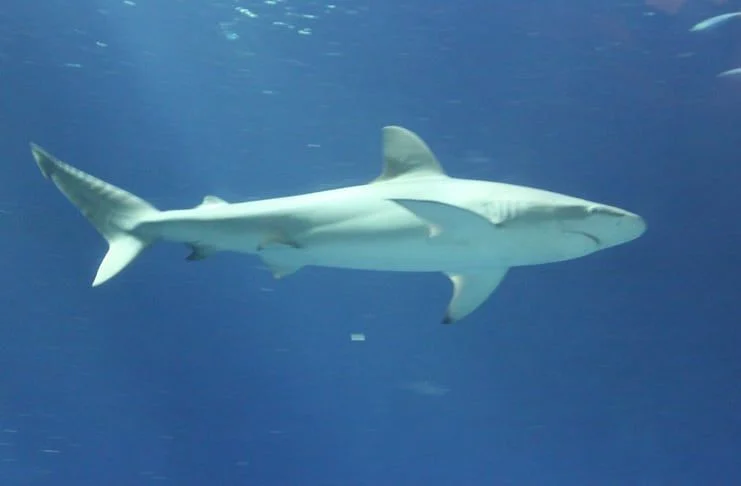
The straightforward answer is yes, there are indeed sharks in Cancun. But if you are worried about meeting one while swimming from a busy Cancun beach, keep the risk in perspective. Shark sightings close to the main swimming areas are uncommon, and shark bites are rare. Most visitors will never see a shark unless they deliberately take a wildlife trip or specialist dive.
Sharks are distributed worldwide and are a vital part of the marine ecosystem. They help maintain the natural balance between species and contribute to the health of Caribbean reefs. And that’s something we can all agree on.
O que você precisa saber
- Sharks live in the waters around Cancun, but encounters at busy Hotel Zone swimming beaches are uncommon.
- Beach swimming, offshore reefs, seasonal whale-shark areas and specialist shark dives are very different settings.
- Shark bites are rare, but visitors should follow beach flags, lifeguard advice and normal ocean-safety precautions.
- Whale sharks visit waters north of Cancun seasonally. They are filter feeders, and swimming with them is regulated.
Where Might You Encounter Sharks Around Cancun?
For most holidaymakers, the honest answer is that you probably won’t encounter one at all.
The beaches along Cancun’s Hotel Zone are busy swimming areas. A shark could pass through coastal water, but seeing one close to shore is unusual. Encounters become more likely farther offshore, around reefs, in seasonal whale-shark areas north of Cancun or on specialist dives elsewhere in the Riviera Maya.
The important thing to understand about sharks in Cancun is that their presence in the wider Mexican Caribbean does not mean they regularly swim among tourists along Cancun’s hotel beaches.
Shark Attack Statistics
Shark bites are rare worldwide, and recorded incidents around Cancun are few. Exact comparisons need some care because databases may distinguish between unprovoked bites, provoked incidents, fishing or boat interactions, and cases where the evidence is incomplete.
The table below provides historical context from the International Shark Attack File. It compares recorded incidents across different geographic areas, so it should not be read as a calculation of one person’s likelihood of being bitten. Population, visitor numbers, time spent in the water, reporting standards and the size of each area are all different.
| Território | Segurança | Fatal | Sobrenome | Escala visual |
|---|---|---|---|---|
| Flórida (EUA) | 828 | 11 | 2014 | |
| África do Sul | 255 | 54 | 2025 | |
| New South Wales (Australia) | 247 | 61 | 2025 | |
| Queensland (Australia) | 191 | 51 | 2025 | |
| Califórnia (EUA) | 124 | 10 | 2025 | |
| Brasil | 107 | 23 | 2021 | |
| South Carolina (USA) | 105 | 2 | 1852 | |
| Western Australia (Australia) | 98 | 16 | 2025 | |
| North Carolina (USA) | 67 | 3 | 2001 | |
| Maui (Havaí) | 64 | 5 | 2015 | |
| Nova Zelândia | 52 | 8 | 2021 | |
| Papua Nova Guiné | 48 | - | - | |
| Ilhas Mascarenhas | 46 | 19 | 2019 | |
| Texas (EUA) | 44 | 2 | 1962 | |
| South Australia (Australia) | 41 | 14 | 2025 | |
| Mexico | 40 | 19 | 2008 | |
| Cancún (México) | 6 | 1 | - |
Fonte: International Shark Attack File (ISAF), Florida Museum of Natural History · floridamuseum.ufl.edu/shark-attacks
Cancún figures are approximate for the local area (a subset of Quintana Roo / Mexico totals), manually compiled from the ISAF interactive map and highlighted for emphasis. Unprovoked attacks are bites on a live human in the shark’s natural habitat with no human provocation. Bars are strictly proportional.
Cancun Shark Attack Risk and Media Reports
However, it’s quite understandable to be fearful of sharks in Cancun. Particularly with movies such as Jaws and the occasional shock and awe headline that some newspapers like to run with.
I am pretty sure the sea did not “fill” with blood, the Caribbean Sea is a huge volume of liquid that would need to be displaced! And the implication the shark ‘targeted’ a Canadian is nothing short of sensationalism.
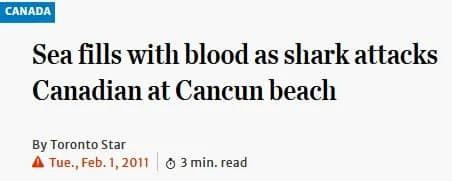
Shark Attacks in Cancun
Nevertheless, shark attacks have indeed occurred in Cancun. There will likely be another at some point in the future, as long as sharks and tourists share the same environment.
Strangely, there were several attacks in a very short space of time in 2011.
There’s an interesting documentary about this which speculated various hypotheses why the attacks happened when they did. The documentary is “When Sharks Attack” by National Geographic, Series 4 Episode 5. Unfortunately, it’s not available on YouTube, but if you get a chance to see it it’s an interesting watch.
Personally, I think it’s one of those statistical flukes. Like when you lose your car keys twice in the space of a week, and then don’t lose them again for another ten years 🙂 Nevertheless, I don’t expect that to be much consolation to the unfortunate people who were injured.
Incident totals can change when cases are reviewed or reclassified. For that reason, this page does not claim that every Cancun incident was provoked or attach the historical fatality to a particular year without supporting evidence.
The figures do not justify pretending that the risk is zero, and they do not justify treating Cancun’s beaches as dangerous shark territory either.
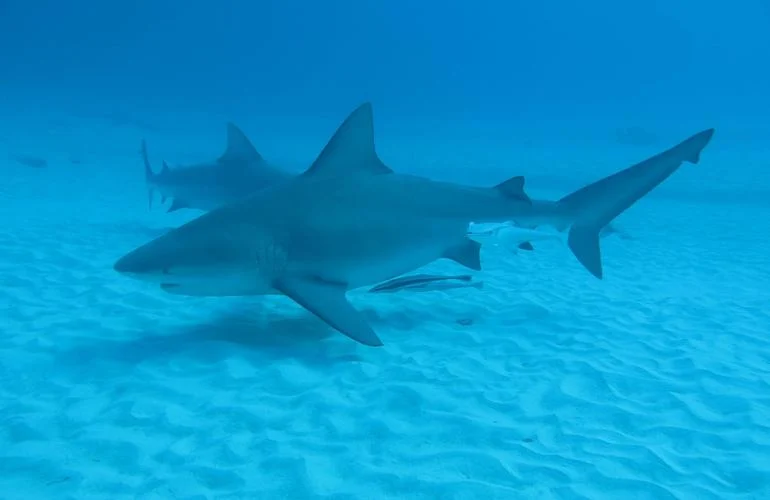
Shark Observation Towers and Shark Nets in Cancun
There are some locations around the World where the risk of a shark attack is regarded as sufficiently serious for the authorities to instigate security measures. Cancun is not one of those.
There are a (very) few observation towers located along Cancun beaches to ensure lifeguards have an elevated view of people enjoying the water. But that is more as a general water safety precaution than a specific shark attack threat.
There are no shark nets on Cancun beaches.
Swimming and Snorkelling Safely in Cancun
Sharks are not the main everyday hazard on Cancun’s beaches. Waves, currents, changing weather and ignoring beach flags are usually more immediate concerns.
- Follow beach flags and lifeguard instructions.
- Swim with somebody and stay reasonably close to shore.
- Avoid swimming near fishing activity or schooling fish.
- Be cautious in low light, particularly around dawn and dusk.
- Avoid excessive splashing and do not enter with an actively bleeding wound.
- Never touch, feed, chase or corner marine wildlife.
What Kind of Sharks Are There In Cancun?
Aside from the timeshare sharks at Aeroporto de cancun, the Mexican Caribbean supports a wide range of shark species. That does not mean every species is commonly seen off Cancun’s beaches. Some live mainly around reefs, some favour deeper offshore water, and whale sharks appear seasonally in feeding areas north of the city.
Tubarão touro
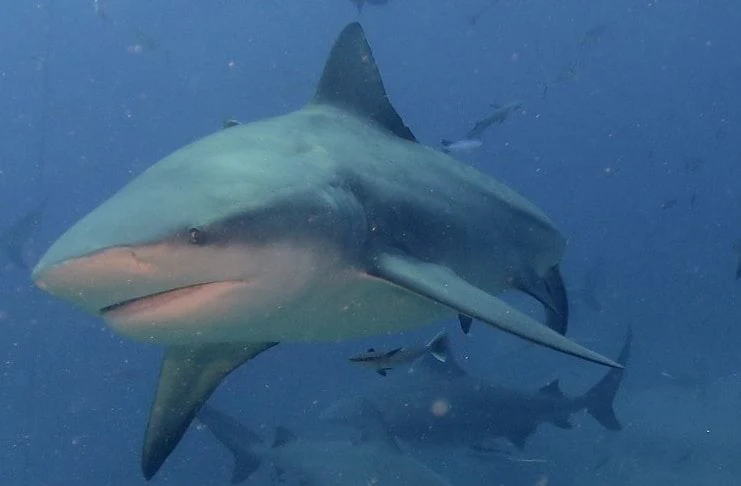
Bull sharks occur in the Mexican Caribbean and are associated with coastal waters. Specialist bull-shark dives are better known around Playa del Carmen rather than along Cancun’s main hotel beaches.
I actually saw a Bull Shark in Cancun once during one of our adults-only catamaran cruises. The shark was a dark shape in about 12 feet of water, half a mile from shore and casually passed by. Our boat crew confirmed it was a Bull Shark and that they rarely see them even though they are seaborne daily. In around 500 cruises out to sea in Cancun that is the only occasion I’ve seen any kind of shark in the wild.
Caribbean Reef Shark
Caribbean reef sharks are native to the wider Caribbean and are most closely associated with coral reefs. Divers are more likely to encounter one around suitable reef habitat than swimmers are from a busy Cancun beach.
Tubarão martelo
Several hammerhead species occur in the wider region. Their distinctive head shape makes them easy to recognise, but they are not a routine sight for people swimming along Cancun’s Hotel Zone.
Tubarão Mako
Mako sharks are fast, highly migratory sharks that favour open water. Their wider range includes the Caribbean, but they are an offshore species rather than one visitors should expect to see from Cancun’s beaches.
Tubarão-limão
Lemon sharks favour shallow coastal habitats, including sandy areas and mangroves, in parts of the tropical western Atlantic. Regional presence should not be confused with frequent sightings in Cancun’s main swimming areas.
Enfermeira Tubarão
Nurse sharks spend much of their time on or near the seabed and feed mainly on fish and invertebrates. They are generally slow-moving, but they are still wild animals and should never be handled, chased or disturbed.
Tubarão baleia
Whale sharks are the largest fish in the ocean. They are filter feeders that eat plankton and other tiny organisms.
They gather seasonally in waters north of Cancun, Isla Mujeres and Isla Contoy. Licensed boats take visitors to observe and swim with them under rules intended to protect the animals, including limits on approach and a ban on touching them. See our Cancun whale shark tours page if you would like to experience this for yourself.
Sharks and Tourism in Cancun
Sharks are fascinating creatures, and their overstated reputation as man eaters makes them a target for thrill seekers. Not surprisingly there are several tourism opportunities and tours that have emerged surrounding them in Cancun and the Riviera Maya.
Shark Fishing in Cancun
Shark Fishing Charters in Cancun are available where fishing boats will take you out 10-20 miles (ca. 32 km) or so beyond Isla Mujeres where Bull Sharks are your quarry. Boats typically leave very early in the morning for 6 or 8 hr duration and have a capacity for up to 6 fishermen.
Cancun Whale Shark Tours
During mid May to September Whale Sharks pass close to Cancun and Isla Mujeres as they migrate following their plankton food source. They often congregate in schools of 20 or 30, sometimes up to 100.
Small boats take tourists out to see them and snorkel beside them. The number of licenses granted to boats are strictly controlled by the Govt and there are many rules in place such as no touching the sharks or diving beside them.
We have a page devoted to passeios para observação de tubarões-baleia if you are considering such a trip. It’s one of those tour experiences that you’ll remember forever.
Cancun Aquarium
The Cancun Aquarium located at Plaza Las Isla has a large tank that contains several species of shark that can be viewed at close quarters behind the safety of glass.
They also run an optional activity where you can be submerged inside an iron cage as the guide feeds the sharks from within the same cage.
Diving with Bull Sharks
I think I would give this one a miss myself. Some Playa del Carmen dive operations will take out experienced divers and attract sharks with the use of bait.
There’s some discussion about whether this may make the sharks more aggressive with humans. But it’s an option for those with balls of steel 🙂
Nurse Sharks on Isla Mujeres
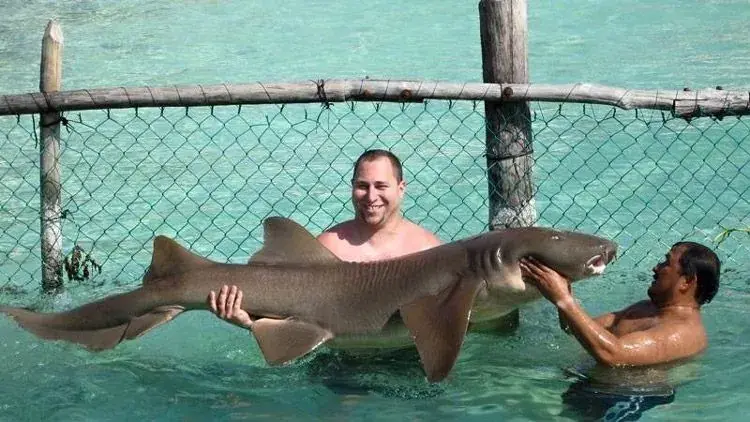
This is one tourism ‘business’ I and many others can not support. There are three or four locations on Isla Mujeres where small pens have been built alongside the docks. The docks are where the catamaran boats arrive for their lunchtime stopover.
Inside the pen is a Nurse Shark that has been captured from the wild along with a Guide. Tourists are encouraged to enter the water to hold or stroke the shark and have their picture taken. The guide asks for a few dollars for facilitating the ‘service’. He then repeats this a hundred or more times a day, 7 days a week.
Nurse Shark Isla Mujeres
Some people say that the Nurse sharks are released and replaced regularly with new captives and are well cared for. Personally, I have my doubts and find it hard to believe to be true. This is an activity I would encourage the eco-friendly tourist to refuse to support and avoid.
Perguntas Frequentes
Are there sharks in Mexico as well as Cancun?
Yes. Sharks live around both of Mexico’s coastlines, including the Mexican Caribbean. Cancun is only one small part of that much larger area, so Mexico-wide sightings or incident figures should not automatically be described as Cancun events.
Are there sharks near Cancun’s Hotel Zone beaches?
Sharks live in the wider waters around Cancun, so their presence is possible. However, sightings among swimmers at the busy Hotel Zone beaches are uncommon. Most deliberate shark encounters take place offshore, around reefs, in seasonal whale-shark areas or on specialist dives.
Are there great white sharks in Cancun?
Great white sharks have a wide global range and occur mainly in temperate and subtropical waters. They are not a shark that visitors would normally expect to encounter at Cancun’s tropical Caribbean beaches.
When was the last shark attack in Cancun?
There is no simple answer unless “Cancun” and “shark attack” are defined consistently. Different records may include nearby areas, provoked interactions, fishing incidents or cases later reclassified. The statistics table provides the accepted historical count, but this page does not attach an unsupported year to the most recent incident.
Resumo
There are sharks in Cancun and elsewhere in the Mexican Caribbean. Most questions about sharks in Cancun come down to personal safety. For someone enjoying the normal Hotel Zone swimming beaches, seeing one is uncommon and being bitten is rarer still.
Respect the ocean, follow local safety instructions and give all wildlife plenty of space. If you want to see a shark, choose a responsible, well-regulated experience that lets the animal behave naturally. That is better for the sharks and usually a far better experience for you too.