
Tulum Ruins: Visiting the Maya City by the Sea
Tulum brings together two very different pleasures: exploring an ancient Maya city and looking out over the Caribbean. The temples are relatively compact, but their position above the sea gives the ruins a character all their own. Come for the buildings and coastal views, give yourself time to wander, and get here before the strongest heat if you can.
The ruins are on the coast just outside modern Tulum, south of Playa del Carmen. They are a manageable morning outing from a Tulum base and a much longer day from Cancun. Our Mayan ruins near Cancun comparison helps if you are still deciding which ancient city to visit.
Cancun hotel pickup for the featured ruins-focused tour is offered on Mondays and Thursdays. Riviera Maya pickup is offered throughout the week. Archaeological admission is listed as an extra charge. For other dates, private trips and cenote combinations, compare our Tulum tours from Cancun.
What to see at the Tulum ruins
Tulum is an enjoyable place to explore without trying to tick off every stone platform. Its principal monuments are close enough together to appreciate the shape of a city: walls, residential buildings, religious structures and the sea beyond. Follow the signed paths and take a moment to look back across the whole settlement as well as at individual temples.
El Castillo
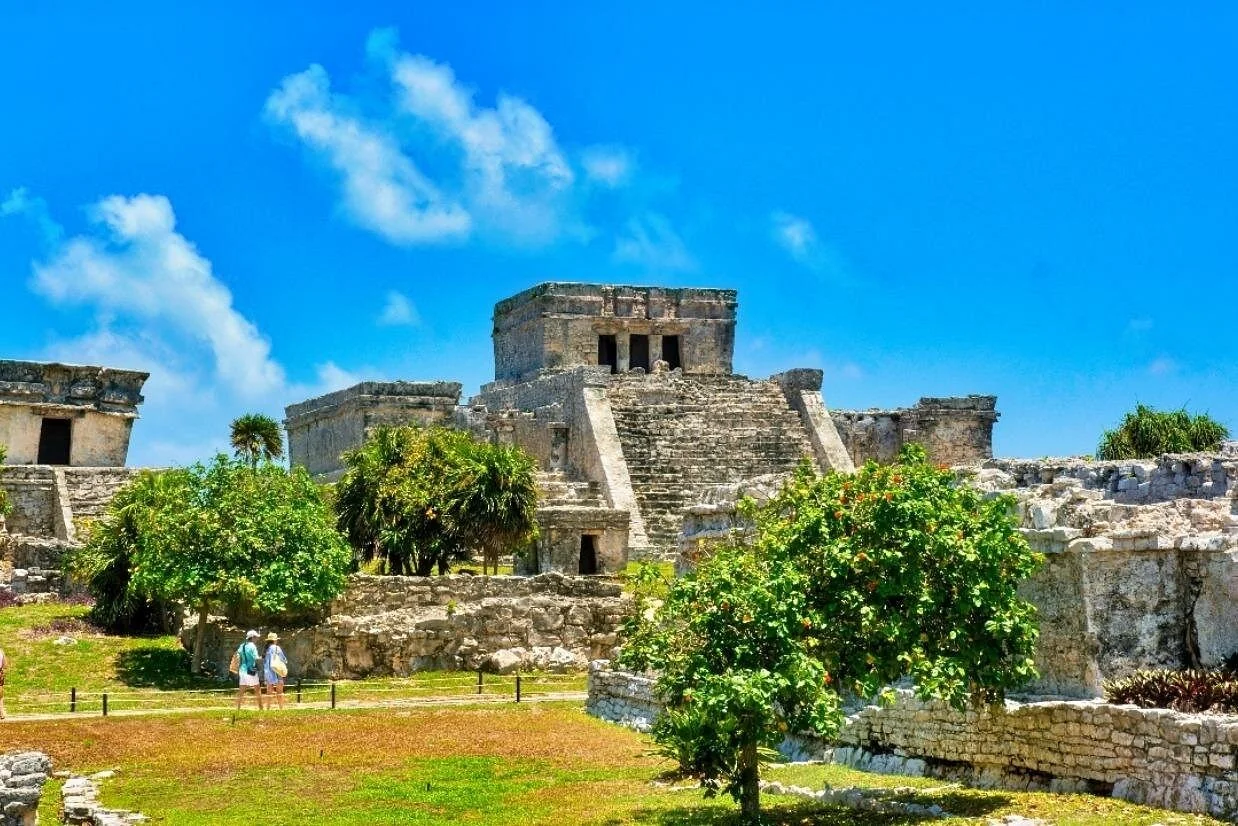
El Castillo is the prominent temple on the cliff and the building most people picture when they think of Tulum. Its position makes it an obvious focus for the visit, with the Caribbean forming the backdrop. Look at it from more than one permitted viewpoint; the relationship between the building, the rocky coast and the surrounding ruins is more interesting than a single close-up.
You cannot climb El Castillo. Stay behind the barriers and enjoy the views from the visitor paths.
The Temple of the Frescoes
The Temple of the Frescoes, also called the Temple of the Paintings, is one of Tulum’s most important buildings. Its surviving murals are a reminder that these ruins once had colour as well as stone. The artwork depicts supernatural figures and a religious world much richer than the bare walls suggest.
View it from the permitted path; do not expect to enter and inspect every painting. A guide can explain the imagery and point out details.
The Temple of the Descending God
Look for the figure above the doorway of the Temple of the Descending God, near El Castillo. It is shown head down, giving the building its name. Descending figures appear elsewhere at Tulum too, so recognising this one helps you notice a recurring feature of the city’s architecture.
The walls, palaces and Temple of the Wind
The wall encloses the landward sides of the ancient centre, with the sea forming its eastern edge. Walking through it makes the change from modern arrival area to archaeological city particularly clear. Along the central route, columned buildings and low platforms help fill out the picture beyond the famous temples.
The small Temple of the Wind stands close to the coast and is another useful landmark for orienting yourself. Pause at the permitted coastal viewpoints, then turn inland again: Tulum deserves a look at its smaller structures as well as its postcard view.
A little Tulum history
The Maya did not build all their cities at the same time. Much of the famous inland architecture belongs to the Classic period, approximately AD 250–900. Most of the visible buildings at Tulum belong to the later Middle and Late Postclassic period, around AD 1250–1550. Earlier evidence exists here too, so those dates describe the main surviving city rather than a single founding day.
Tulum developed as a coastal trading and religious centre, with its sea access helping connect it to other communities. It was still occupied when the Spanish reached this coast in the early 16th century. Its story continues beyond the period when many great inland centres had declined.
The name Tulum refers to its wall; the older name Zamá is associated with dawn. That is a fitting association for a city facing the rising sun, although an ordinary visit starts after sunrise. The smaller temples, columned palaces and flat-roofed buildings belong to the region’s East Coast architectural tradition.
Tulum ruins tickets and opening hours
The archaeological zone opens daily from 8am to 5pm, with last entry at 3.30pm. Parque del Jaguar has a longer visiting day: its current official visitor information lists 8am–7pm, with last park admission at 5pm. Getting into the park late in the afternoon does not give you late entry to the ruins.
What the current admission charge covers
The federal scheme introduced on 20 July 2026 separates the park charge from the combined protected-area and archaeological charge. For standard paying visitors, the breakdown is:
| Visitor | Parque del Jaguar | Protected area + ruins | Standard full visit |
|---|---|---|---|
| Foreign visitor | 100 pesos | 165 pesos | 265 pesos |
| Mexican visitor, Monday–Saturday | Free | 80 pesos | 80 pesos |
These are the reduced charges announced under Tulum Renace. Some INAH and CONANP visitor listings still display older individual fees. Do not add those older figures to the new combined charge. Parking, optional transport, guides and any additional activities are separate from the standard admission above.
Sunday entry, children and concessions
Mexican visitors have free Sunday entry under the current scheme. Accredited Tulum municipal residents receive relief from the archaeological and protected-area charges. Other statutory concessions remain, including qualifying children, older visitors, people with disabilities, students and teachers. Bring the relevant official identification or credential.
The eligibility rules differ between the archaeological area, the protected area and the park. For example, CONANP lists an under-12 exemption, while INAH’s child concession uses an under-13 threshold. Foreign residents in Mexico have specific concessions, including Sunday archaeological entry; that does not automatically waive every park or protected-area charge. Have the official cashier apply your family’s qualifying categories rather than assuming a child’s age or a student card makes the whole visit free.
Buying the right ticket
Use the official ticket counters and keep the tickets or wristbands you receive. A tour voucher, a guide booking and archaeological admission are different purchases. An online offer labelled “Tulum tickets” may supply only one part of the visit. INAH displays an online-ticket link, but that alone does not confirm that a complete Tulum visit is available online for your date.
If you book a tour, read the inclusions and exclusions together. The featured guided trip currently lists an admission supplement even though its itinerary also labels the stop as admission included. Budget for the explicitly listed extra charge and check the selected booking option before paying.
Getting to Tulum and arriving at Parque del Jaguar
The ruins are north-east of Tulum town, on the sea side of Highway 307. Tulum town, the beach hotel area, Tulum airport and the archaeological zone are different destinations. Give your driver the ruins or official park visitor entrance as your destination, rather than just asking for “Tulum”.
From Cancun, the road journey runs south through the Riviera Maya and past Playa del Carmen. Allow roughly two hours each way as a planning estimate, with more time for hotel pickup circuits, traffic and arrival formalities. From Playa del Carmen, roughly an hour is a useful starting allowance. Your exact hotel location makes a substantial difference.
Car, taxi or bus
A rental car gives you control over departure time and any later cenote stop. Follow current park signs to authorised parking, keep the return route in mind and check the parking charge separately. Older descriptions of roadside parking or the former entrance should not be your arrival instructions.
A taxi is straightforward from a nearby base if you agree the destination and fare first. For a return trip, decide where you will be collected before walking into the park. A bus to Tulum town still leaves you with a local transfer; check the actual stop when buying a service advertised for Tulum or the ruins.
The park entrance is not the ruins gate
The current park visitor information directs visitors through the principal CATVI entrance, the visitor service centre. Expect an onward walk or park transport between arrival and the archaeological gate. Allow time for the entrance checks and tickets before you begin your actual ruins walk.
The July 2026 announcement put optional electric transport at 20 pesos. Check the boarding point, route and posted charge on arrival; parking and transport arrangements have been changing. A transfer helps with the approach but does not remove the walking among the monuments.
A good route and how long to allow
I would aim for an early visit and allow around two to three hours for arrival and the ruins. That gives you breathing room for ticketing, the approach, a guided explanation if you want one and a slower look at the coastline. A one-hour dash can show you the highlights, but it leaves little room for delays or stopping at something that catches your interest.
- Start with the wall and central buildings. Get your bearings instead of heading straight for the sea. Notice how the temples and columned buildings relate to one another.
- Pause at the Temple of the Frescoes. This is a good place for a guide’s explanation of the city’s religious imagery.
- Continue towards El Castillo and the Descending God. Take your time at the permitted viewpoints and look back across the settlement.
- Follow the open coastal route. Enjoy the sea views and smaller temples, then return along the signed visitor paths.
Treat this as a sequence of highlights rather than a promise that every path will be open in that order. Follow the signs and staff instructions on the day. If you have arranged a pickup, leave time for the return to the actual meeting point, not just the exit from the ruins.
For a relaxed day, the ruins followed by lunch can be plenty. A cenote makes a pleasant extra stop if you want a swim, but it needs its own admission and travel allowance. Combining Tulum with Cobá is a bigger archaeological outing; from Cancun, trying to do both unhurriedly makes for a long day.
The Tulum ruins beach and coastal views
The Caribbean view is part of the attraction, and you can enjoy it without going down to the sand. The small beach directly below the archaeological cliffs should not be treated as a guaranteed swimming stop. Stair access, conservation restrictions, nesting turtles, weather and sea conditions can affect what is open.
Government statements in 2026 distinguish free public beach access from paid entry to the archaeological area. That does not mean you can use every staircase below the monuments, or that paying for the ruins gives unrestricted swimming access. Follow the designated public beach routes and current instructions if you want a separate beach visit.
Plan a swim as a separate stop at an open beach or cenote, unless your tour specifically includes it.
What to bring, walking and visiting rules
Tulum is exposed to the sun, with uneven paths and limited shade among the ruins. Bring a hat, comfortable walking shoes and water in a refillable bottle. Light clothes which cover your shoulders can be useful, and a small bag is easier to carry than beach luggage. Eat before entering the archaeological area: INAH prohibits bringing food inside.
Use the visitor-area toilets before the main walk. INAH lists toilets and accessibility services, but that is not a promise that every path, viewpoint or transfer is step-free. If walking distance, wheelchair access or heat tolerance determines whether you can visit, check the complete arrival route and the particular transport option beforehand.
With young children, build in pauses and keep the return trip realistic. From Cancun, the drive may feel longer than the ruins visit.
Stay on the visitor paths and keep off the monuments. Do not feed wildlife or disturb the vegetation. The park discourages disposable plastics and prohibits alcohol, drones and sound playback; INAH also prohibits smoking. Leave pets at home and follow the park’s specific provisions for assistance animals.
Ordinary personal photographs are different from professional photography or filming. Special equipment may require fees or advance permission; a tour ticket does not grant that authorisation. For a normal sightseeing visit, a phone or simple camera is the easiest choice.
Tulum tours from Cancun
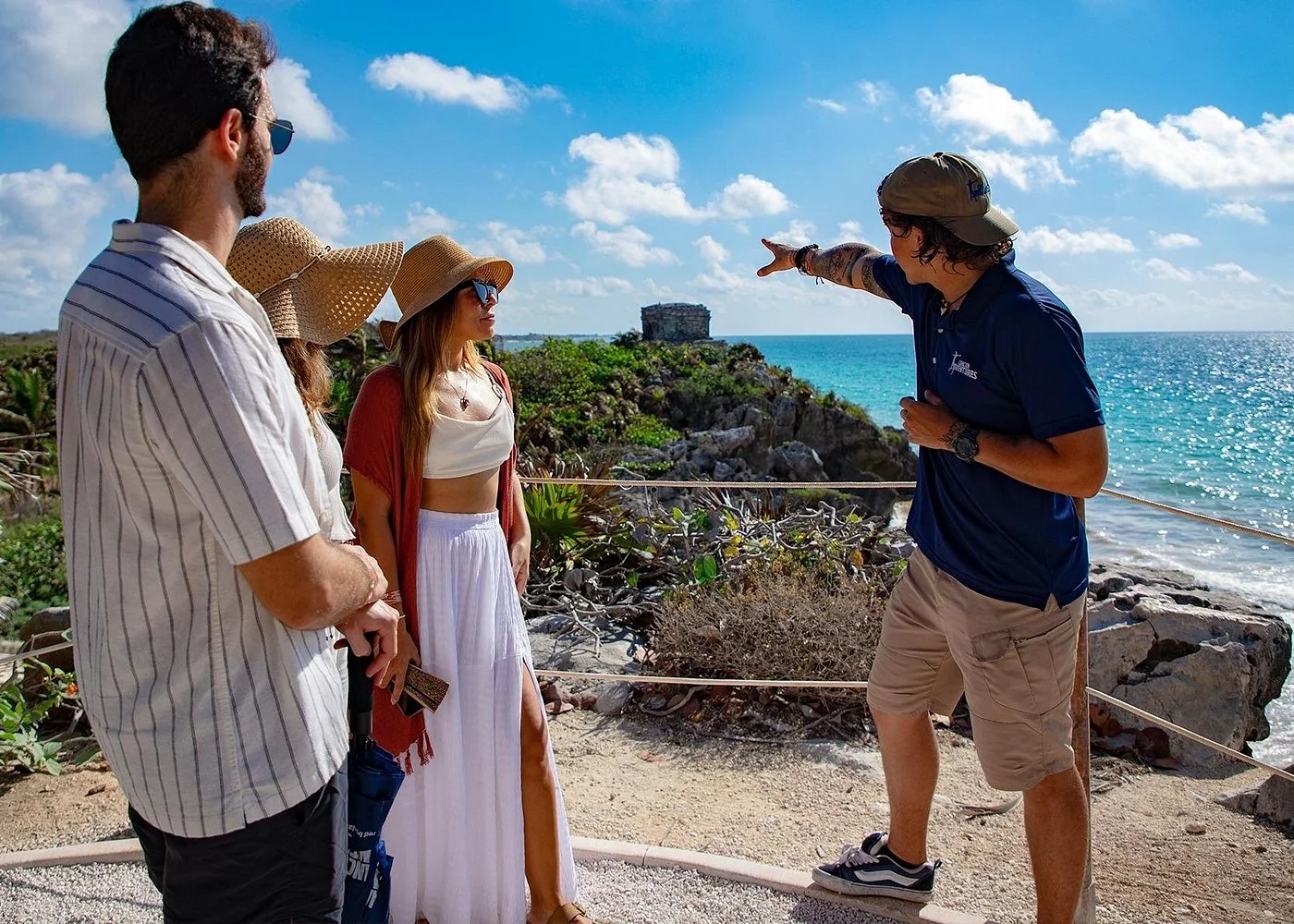
A guided trip is useful if you want the transport arranged and someone to explain the buildings as you walk. The featured Cancun Adventures trip concentrates on Tulum, with guided time rather than a string of major attractions. Its roughly two-hour ruins visit is only one part of the day; hotel travel is additional.
For the full choice of shared trips, private transport and cenote or park combinations, use our Tulum tours from Cancun comparison. You can also browse Cancun tours for other days out. Choose the amount of time you want at Tulum first, then decide whether another stop improves your day.
If the sea views matter most, Tulum is the distinctive choice. If you want a larger jungle walk, compare Cobá ruins; for a royal palace and remarkable surviving stucco decoration, look at Ek Balam. Each offers a different experience, so there is no need to turn one holiday day into a race between all three.
References
- Instituto Nacional de Antropología e Historia — Tulum visitor information, archaeological descriptions and visitor leaflet.
- Diario Oficial de la Federación — July 2026 Tulum admission decree.
- Secretaría de Turismo and Government of Quintana Roo — Tulum Renace implementation and public beach access updates.
- Comisión Nacional de Áreas Naturales Protegidas — Tulum National Park visitor information and concessions.
- Grupo Mundo Maya — Parque del Jaguar visitor entrance, hours and park rules.
- Viator and Cancun Adventures — the featured tour’s current itinerary, pickup days and admission exclusions.