
Mayan Ruins near Cancun
The Maya ruins you can visit from Cancun offer very different days out. Chichén Itzá has the great monuments, Tulum has the Caribbean setting, Cobá has woodland paths between scattered groups of buildings, and Ek Balam rewards a closer look at Maya architecture and sculpture. Choose the experience that interests you, then decide how much of your holiday you want to spend getting there.
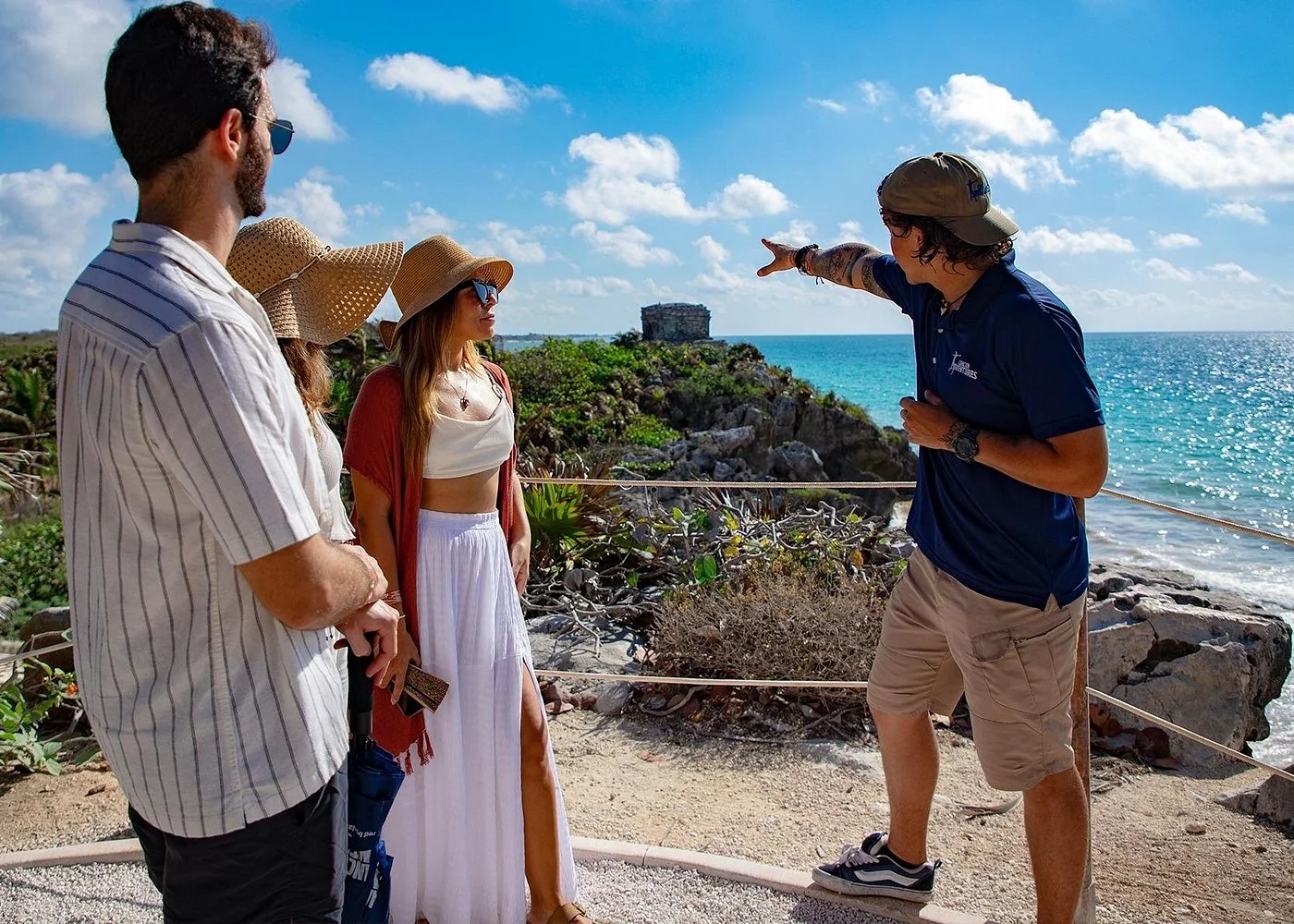
You do not have to take a long excursion to see archaeological remains. El Rey and San Miguelito are in Cancun’s Hotel Zone and make a worthwhile shorter outing. If you want a major ancient city, though, allow room in the day for the journey as well as the ruins.
For a first big archaeology trip, start with Chichén Itzá. For ruins and sea views, choose Tulum. Cobá and Ek Balam are good alternatives when the forest setting or the detail of the buildings appeals more than seeing the best-known landmark.
Which Maya ruins should you visit?
If you want one substantial archaeological visit, give it enough time rather than collecting as many stops as possible. A long excursion with two sets of ruins can suit someone keen on archaeology; it is less appealing when half the group really wants a swim and an early return to the hotel.
| Place | Choose it for | Journey and time | Walking and setting |
|---|---|---|---|
| Chichén Itzá | Major monuments and the strongest first-time archaeology choice | Long inland journey; plan a full day from Cancun | A substantial walk across open areas; shade between some buildings |
| Tulum | Coastal scenery and a more compact archaeological visit | Roughly two hours each way before pickups and arrival access | Exposed paths, uneven ground and the walk from the arrival area |
| Cobá | Forest surroundings and exploring separated building groups | Inland beyond Tulum; treat a Cancun excursion as a full day | Longer paths between groups; more tree cover, with exposed clearings |
| Ek Balam | Palace architecture and elaborate Maya decoration | Inland near Valladolid; allow a full day with transport and extra stops | A more concentrated visit than Cobá, with uneven ground and stairways |
| El Rey | A short introduction close to Hotel Zone resorts | A local outing rather than an out-of-town excursion | Low ruins along a main route and small plazas; still an outdoor walk |
| San Miguelito + Museo Maya | Archaeology with museum context | Both within the Hotel Zone; leave time for museum and ruins | Indoor galleries followed by paths among vegetation and remains |
Different cities, different stories
These places were not all built at the same time or for the same purpose. Cobá and Ek Balam flourished during the Classic period, while much of what visitors see at Tulum and Cancun’s coastal settlements belongs to the later Postclassic period. Chichén Itzá developed into one of the peninsula’s great centres, with buildings that reflect a long and complex history.
Look beyond the pyramid photograph. Roads, ball courts, temples, palaces and the position of a settlement tell you about trade, political power, beliefs and everyday life. A good guide helps connect those pieces without turning the visit into a list of dates.
Chichén Itzá: the major archaeological day trip
Chichén Itzá is the strongest starting point if you want to see one of the great Maya cities. El Castillo is the familiar landmark, but the Great Ball Court, Temple of the Warriors and other buildings make this much more than a stop for one photograph. It is a UNESCO World Heritage site, and its scale is part of the appeal.
The trade-off is the day from Cancun. Travel west into Yucatán, then allow enough time to explore instead of rushing back to the bus. A guide is especially valuable here: the relationships between the buildings and their carved details are easier to understand with an explanation.
Much of the main visit is exposed to the sun. An arrival near opening time is a sensible target for avoiding the strongest heat and some of the group traffic. El Castillo is viewed from the ground, not climbed. A cenote or Valladolid stop can make a varied day, but each addition takes time.
Compare early departures, shared and private transport in our Chichén Itzá tours from Cancun.
Tulum: ruins with a Caribbean view
Tulum’s appeal is the combination of an ancient walled settlement and its position above the sea. It was connected to coastal trade, and the surviving buildings give the scenery a story. You can see El Castillo, the Temple of the Frescoes and other remains along a relatively compact route.
Choose Tulum when the setting matters as much as the archaeology. The core ruins visit is shorter than a thorough exploration of Chichén Itzá, but a Cancun departure is still a substantial outing: allow roughly two hours each way, plus pickups, traffic and access from the arrival area.
Compact does not mean cool or effortless. Open paths have limited shade, and the approach adds walking before you reach the ruins. A cenote pairs well with the visit if you want a swim, but do not count on swimming at the beach below the archaeological zone as part of your ticket.
Our Tulum tours from Cancun compare a focused ruins trip with longer combinations and explain the entrance and access distinctions.
Cobá: a forest visit with more ground to cover
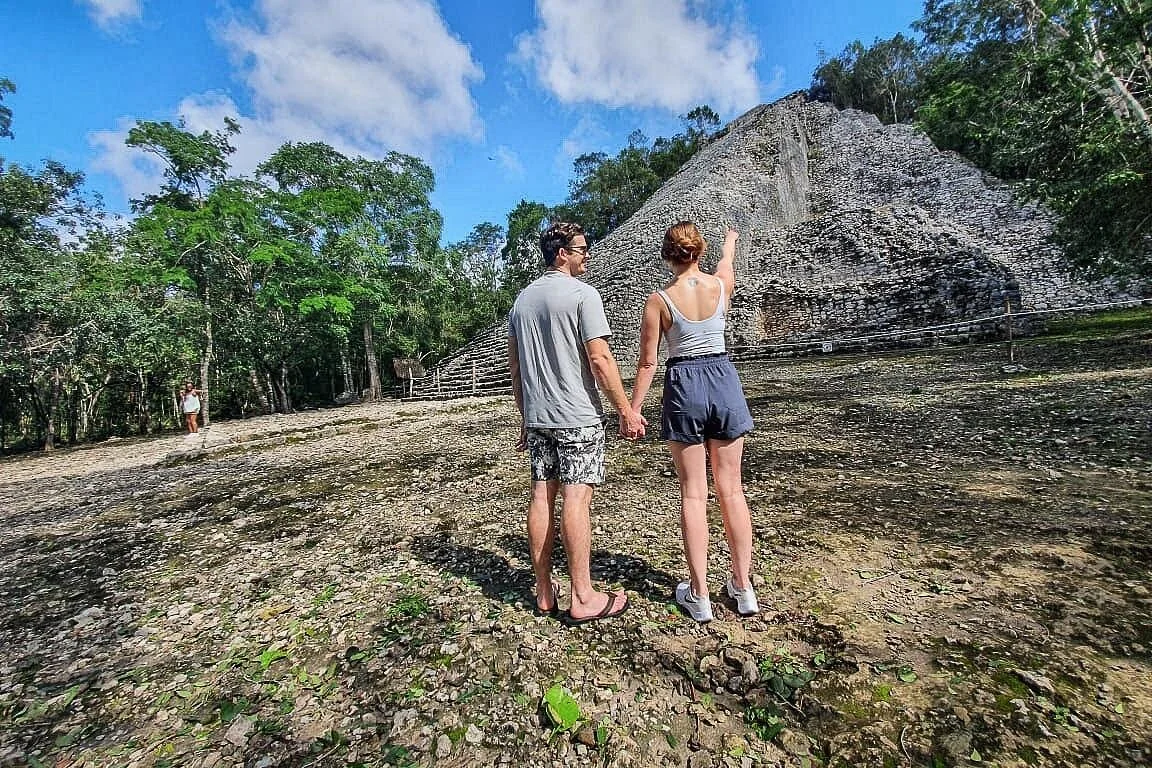
Cobá gives you a different sense of an ancient city. Its groups of buildings are separated by paths through woodland, and its network of raised roads, known as sacbeob, was an important part of the settlement. The visit is as much about moving through the landscape as standing in front of a monument.
Tree cover offers more shade along parts of the route than the open spaces at Tulum, but the clearings are hot and the paths add distance. Allow time to move between the groups you want to see. Bicycles or cycle taxis can change how much ground you cover; check whether these are included in your chosen trip.
Older advice saying you cannot climb at Cobá is out of date. INAH opened a new staircase at Nohoch Mul in December 2025 to restore visitor ascent while protecting the original steps. Check the current access arrangements if the climb is a main reason for your visit. The forest walk is worthwhile even if you prefer to stay on the ground.
Cobá is inland from Tulum, so combining the two is a realistic way to compare coastal and inland settlements in one day. It also means two archaeological walks and more travel. Choose that combination because you want both places, rather than because the itinerary lists more attractions.
Ek Balam: palace architecture and sculptural detail
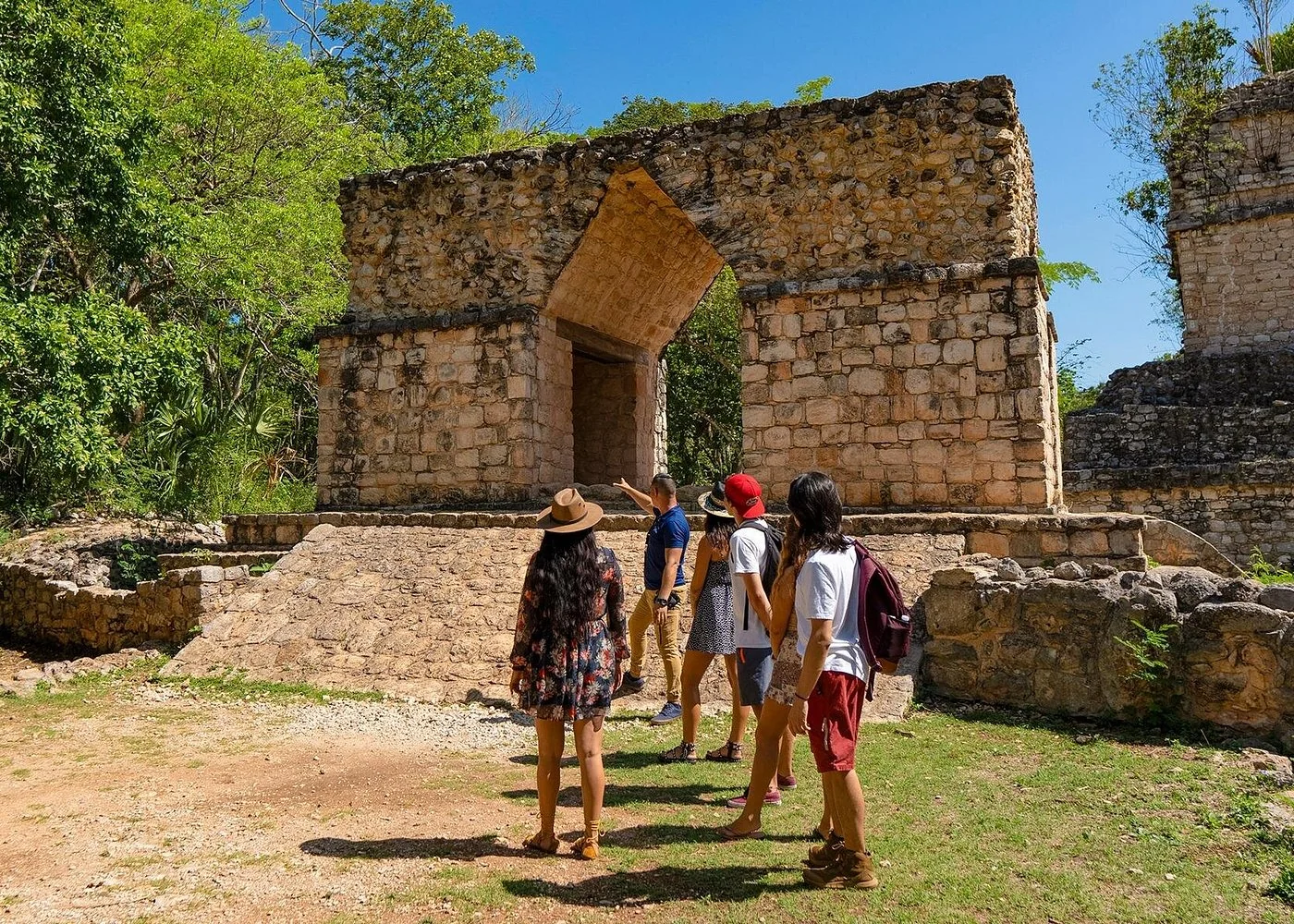
Ek Balam, north of Valladolid, is a particularly interesting choice if you enjoy the detail of buildings. Its Acropolis was a royal palace and burial complex, and the elaborate stucco decoration is a major reason to visit. It offers a different focus from Chichén Itzá’s broad monumental spaces.
The main archaeological visit is more concentrated than Cobá’s spread-out route, but the journey from Cancun still makes it a full-day commitment. A guide can explain the palace, the rulers represented in the decoration and how the surviving structures fit together. Leave time to look closely rather than treating the Acropolis as a quick photo stop.
Expect uneven paths, outdoor heat and stairways where access is permitted. Do not choose the visit on the assumption that every structure will be open to climb. A cenote and Valladolid are sensible nearby additions, provided the itinerary leaves enough time at the ruins. They make a broader day out, rather than a longer archaeological visit.
El Rey and San Miguelito: archaeology without leaving Cancun
El Rey
El Rey is in the southern Hotel Zone, near Playa Delfines. Its low structures, main route and small plazas make it a useful introduction when you want an hour or so of archaeology instead of a whole day on the road. It will not give you the monumental scale of Chichén Itzá, but it makes Cancun’s own history visible between the resorts.
The settlement grew during the late Postclassic period and was connected with maritime trade and fishing. Take water and comfortable shoes: being close to your hotel does not remove the sun or uneven surfaces.
San Miguelito and Museo Maya de Cancún
San Miguelito sits beside Museo Maya de Cancún in the Hotel Zone. The museum ticket includes access to the archaeological remains, reached along paths among vegetation. This is the better local choice if you want objects and explanation in the galleries as well as buildings outdoors.
Leave a few hours for both parts, and check the museum’s opening days before setting off. A museum-and-ruins visit is an easy way to add cultural context to a beach holiday; our things to do in Cancun include other local outings you can combine with it.
How Xcaret differs from an archaeological excursion
Xcaret is a broader park day with rivers, wildlife, cultural attractions and an evening show. It also contains genuine pre-Hispanic remains from the ancient coastal settlement, so it would be wrong to describe everything there as a reconstruction.
The distinction is the emphasis of your day. Modern cultural presentations and recreated settings are different from exploring a substantial ancient city. Choose Chichén Itzá, Tulum, Cobá or Ek Balam when archaeology is your main interest; choose Xcaret when you want history and culture within a varied day of activities.
Compare the ticket and transport choices in our Xcaret tours.
Make time for the ruins, the journey and the heat
Start with the place you most want to see, then add at most the stops you really value. Two hours at an archaeological site is not the same as a two-hour excursion from Cancun. Hotel collections, the drive, the approach to the entrance, lunch and the journey back all take their share of the day.
For a first visit, a guided introduction followed by time to explore works well. If you prefer independent travel, plan the route and entry separately and leave enough energy for the return drive. Chichén Itzá and Ek Balam are west of Cancun towards Valladolid; Tulum is south along the coast, and Cobá is inland from Tulum.
Choose an early visit where practical, carry water, wear shoes with grip and bring a hat and sun protection. Tree cover at Cobá or San Miguelito helps, but none of the outdoor visits is a reliable escape from the heat. Check the Cancun weather before fixing the day, and allow for rain making stone and uneven paths slippery.
If walking stamina is the deciding factor, assess the actual route: distance at Cobá, exposed walking and entrance access at Tulum, and stairs at the inland sites. A shorter local visit may suit you better than a long excursion with several stops.
What to check before booking a ruins trip
- Cancun departure: check your hotel or meeting point and operating days. A Riviera Maya listing does not automatically include pickup from every Cancun resort.
- Time at the ruins: look for the guided portion and independent time, rather than judging by the total trip duration.
- Admission: check archaeological entry and required state, park or protected-area charges. Transport, a guide or an audio tour alone is not an entrance ticket.
- Combination stops: check the named cenote, swimming time, lunch and any extra equipment charges. Decide whether those additions improve the day you want.
- Walking and access: assess the approach, paths, stairs and current climbing arrangements, especially if a particular viewpoint matters to you.
For most first-time visitors, Chichén Itzá is the big archaeological choice and Tulum is the scenic coastal choice. Choose Cobá for the forest journey through the ruins, Ek Balam for the detail of its buildings, or Cancun’s own remains when you want a shorter outing. Our Cancun tours offer other ways to spend the day if you decide archaeology is only one part of your plans.