
Sea Lice in Cancun | Prevention and Treatment
If you plan to swim in the sea around Cancun, it is worth knowing about sea lice, especially in the warmer months when reports are more common. More importantly you should know how to avoid them, and what to do if they get you.
Below is information on the sea lice season in Cancun when they are likely to be at their most abundant. Plus advice on how to prevent sea lice attacks in the first place.
Read our explanation of Safe Sea Lotion. It is a sting-inhibiting sunscreen sold for jellyfish and sea lice exposure. If you want to use it, check the current product directions and arrange it before your trip rather than counting on finding it locally.
It may be one useful precaution alongside checking local beach advice and changing out of wet swimwear promptly. Scroll down for details.
If you are unfortunate enough to have a painful meeting with sea lice in Cancun then this article also explains ways to ease a mild rash and when to get medical help. We also have a few tidbits of advice on where to buy any necessary creams and medication locally in Cancun.
We aim to provide all the information necessary to make sure your trip to Cancun goes without an itch. 🙂
Are There Sea Lice in Cancun?
Yes, at certain times of year there are. The itchy reaction is called seabather’s eruption, sometimes called pica pica. “Sea lice” describes the tiny stinging organisms, not the rash itself.
They can be responsible for a painful itchy rash when swimming in the Caribbean Sea off the beaches of Cancun.
What Are Sea Lice?
Sea lice in Cancun are in fact, not lice at all. Don’t confuse them with the parasitic louse that affects fish. Also, they are not sand fleas, sand lice etc that live in wet sand.
In the Caribbean, seabather’s eruption is commonly linked to tiny stages of the thimble jellyfish (Linuche unguiculata). These drift in seawater and can be difficult to spot.
Because they are small and nearly transparent, you may not see them before getting in.
Here’s a picture taken in Cancun that I took myself of the adult thimble jellyfish.
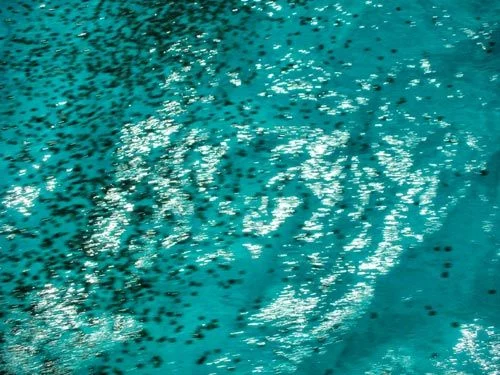
On one visit, I saw adult jellyfish stretched out in long ribbons in the water.
Seeing adult jellyfish is a good reason to ask about current beach conditions, though their presence does not tell you whether stinging larvae are there.
The rash often shows up where swimwear holds the tiny organisms against your skin.
But, if they get through your bathing suit the fabric acts as a net, pisses them off and their venom can be triggered.
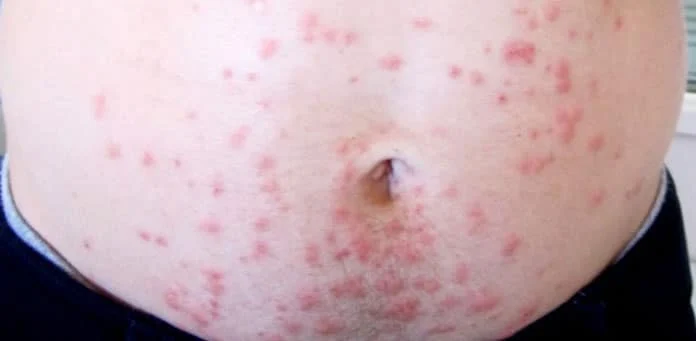
A Sea Lice attack will cause large red welts and blisters, often in the most sensitive of places!
Safe Sea Lotion: An Extra Prevention Option
The sensible traveler should always take along a few medications when traveling abroad. If ocean swimming is on your Cancun itinerary, you may also want to pack Safe Sea rather than look for it after arrival.
After all, you’ll be taking sunscreen with you and Safe Sea offers sunscreen versions with an added sting-inhibiting formula. Follow the directions on the exact bottle you buy; the manufacturer advises applying it under swimwear when sea lice are a concern.
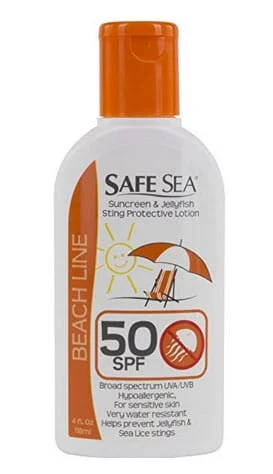
Safe Sea is not a treatment it is a preventative measure and therefore should not be applied after an attack has already occurred.
Safe Sea is marketed for both jellyfish stings and seabather’s eruption. It is an optional extra, not a reason to enter water where beach staff warn of a current problem.
A randomized field trial found fewer ordinary jellyfish stings on skin treated with Safe Sea than on skin treated with a standard sunscreen.
Safe Sea is sold in different formulas. Check the current listing for SPF, age directions and availability before ordering. Browse the Safe Sea range on Amazon.
You may also be able to purchase Safe Sea at places such as small local dive shops in your area. But one place you will NOT find Safe Sea is in Cancun.
How to Prevent Sea Lice From Spoiling Your Vacation
In order to help prevent sea lice affecting your Cancun vacation it is first important to understand how and why the thimble jellyfish larvae trigger their nematocysts (‘stingers’ to non biologists).
Then see what you can do by your own actions in order to minimize the risk.
Why Do Sea Lice Sting?
Each tiny organism has stinging cells called nematocysts. Pressure alone is often enough to cause them to fire.
The pressure between your body and your swimsuit as friction is caused by the action of swimming in the Ocean, is enough to trigger them.
Being trapped in body creases such as the joints of the arms and legs, or even against your neck because of long hair, annoys the hell out of them.
Increased friction such as may be caused by sitting on a surfboard, wearing a wet costume on a lounger, on a bus or in a taxi increases the risk. These critters live long after you have left the Ocean.
What Can I Do to Decrease the Risk of Sea Lice Stings?
When it comes to sea lice, less is more. Because the stinging action is triggered mainly by swimsuits then I would recommend ladies swim naked or at least wearing only a small thong 🙂
Seriously though, the smaller the amount of skin covered the smaller the area of risk exposed. So, certainly avoid T-shirts or long baggy shorts in the sea when sea lice have been reported; extra loose fabric can trap the organisms.
When you’ve left the water then instead of showering in fresh water with your suit on, remove your swimsuit as soon as you can, then rinse or shower with the suit off. Do not scrub your skin while the suit is still on. Then wear a dry change of clothes to go back to the beach, pool or bar.
If you’re away from your room, bring a spare costume with you and change into it before you shower in the fresh water. Wear a dry costume and shower in that. You’ll soon dry off again in the hot Cancun sun.
Swimming costumes that have been used during sea lice outbreaks should be cleaned with detergent and heat dried. If you just throw your suit on the balcony and use it the next day, chances are there will be stinging cells left in the fabric, and they won’t take kindly to their night on the tiles.
Use sunscreen for sun protection; ordinary sunscreen should not be relied on to prevent seabather’s eruption. If you choose Safe Sea, use it as an extra precaution and follow its label.
If you have a history of severe reactions then consider confining your swimming activities to the pool if a confirmed outbreak is known of.
Sea Lice Season in Cancun
The season for Sea Lice in Cancun extends all the way through from March until August. The highest risk months are April, May, June and July. Outbreaks are sporadic though and not normally consistent throughout the whole of the sea lice season.
The best source of warnings for when outbreaks are happening are those in the area. Talk to other vacationers, the lifeguards and in many cases other hotel staff will know.
Look out for leaflets handed out either on the beach or in your hotel lobby.
Areas Where Sea Lice in Cancun Attacks Are Most Prevalent
On Cancun’s “7”-shaped Hotel Zone, the long Caribbean-facing side is more exposed to open water. It is worth asking about sea lice there, although current conditions can change from beach to beach.
On the bay side of Cancun (the top of the 7) the waters are calmer and there is some shelter from Isla Mujeres.
The exposed stretch runs south from around Punta Cancun along the main Hotel Zone beaches. Ask locally about the specific beach you plan to use instead of assuming another beach is clear.
Adult jellyfish may be visible in the water, but the tiny stinging stages linked to seabather’s eruption can be hard to see.
Just because there are no adult jellyfish visible it does not mean that the microscopic larvae are not.
Sea Lice Attack Symptoms
Itching may start soon after swimming or later the same day. Some people have reported a prickling feeling while in the water.
A sea lice rash is not a pretty sight. Itchy spots, welts or small blisters often appear beneath swimwear or where fabric and hair hold the organisms against skin. Symptoms can take longer than a week to settle.
Mainly due to the itchiness you may have trouble sleeping. Some people, especially children, may also feel unwell or develop fever or stomach symptoms. Those symptoms deserve medical advice rather than an assumption that sea lice are the cause.
Ouch! The Sea Lice Got Me. What Do I Do Now?
Well, a sea lice irritation is a kind of dermatitis i.e. an inflammation of the skin. First, remove and wash your swimwear and avoid scratching the rash.
For a mild itchy rash, a pharmacist can advise on an oral antihistamine or an over-the-counter hydrocortisone product appropriate for your age and the affected skin. A cool compress can also help.
Do not put steroid cream on broken skin or sensitive areas unless a pharmacist or clinician advises it. Seek medical advice if the reaction is extensive or severe.
For comfort applying calamine lotion will also help.
If the situation is severe then Doctors advice should be sought. Remember, it is possible that any developing rash while on your vacation may not be due to a sea lice attack and could be something more serious. Get urgent help for trouble breathing or swallowing, or swelling of the lips or face. Seek prompt medical assessment for fever, worsening pain, spreading redness, pus, a widespread or rapidly spreading rash, or symptoms that are not improving.
An itchy rash beneath swimwear after ocean swimming is consistent with seabather’s eruption, but other stings, skin conditions and infections can look similar. A rash on exposed skin after beach time may have a different cause, including sand fleas; a sudden painful visible-jellyfish sting is a different situation.
You should also remember that this is not contagious, but several swimmers can react after sharing the same water. Similar rashes in your group do not confirm the cause.
But I’m in Cancun and Don’t Know Where to Get This Stuff?
Yes you’re in Cancun, but we still have pharmacies, and we also have Doctors. Many hotels can help you contact a doctor if the symptoms call for one; ask about the charge before a routine visit.

In the Cancun Hotel Zone there are smaller pharmacies who may also have an on site Doctor and may have what you require. The most common pharmacy chains in Cancun are:
- Ahorro
- YZA
- Farmacia Similares (generic drugs at a cheaper price)
The large supermarkets such as Walmart, Chedraui and Soriana all have large pharmacies with qualified pharmacists. They will probably have a larger range of products than the smaller hotel zone pharmacies.
Branches and stock vary, so ask at your hotel for the nearest open pharmacy.
If you need transport outside the Hotel Zone, see our getting around Cancun advice.