
Cancun Beaches
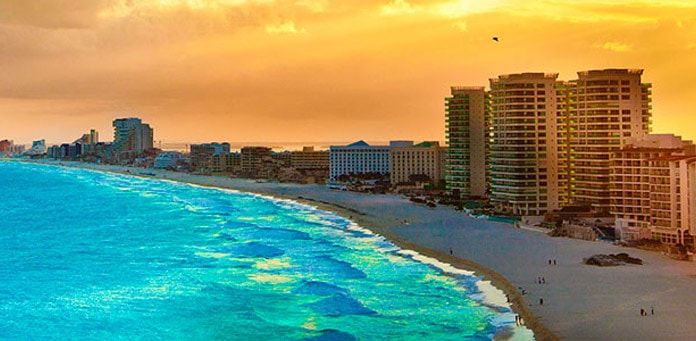
The beach is the obvious reason to come to Cancun. But choosing a beach is about more than finding the nearest patch of white sand. One side of the Hotel Zone is generally more sheltered; the other faces the open Caribbean, with the long beaches and bigger waves many visitors picture before they arrive.
Start with the kind of beach day you want. A gentle swim with children, a wide-open sea view and an afternoon beside a resort are different priorities. You can enjoy all three during one holiday, but you may need to change beaches to do it.
Understand the coastline first
Think of the Hotel Zone as a roughly shaped number 7. The upper arm faces north across Bahía de Mujeres towards Isla Mujeres, up to the turn at Punta Cancun. This is generally the more sheltered side, and a sensible place to begin when calmer water matters more than waves.
After Punta Cancun, the long shore runs south towards Punta Nizuc, facing the open Caribbean. This is where you find much of Cancun’s broad resort-beach experience: white sand, turquoise water and an uninterrupted sea horizon. The trade-off is greater exposure to waves and currents. A lovely beach is not automatically an easy swimming beach.
The difference is not just wave height. On the bay side, the water can feel shallower and the bottom varies from one stretch to another. On the open coast, the sand, beach width and slope into the water vary too. Check the actual stretch rather than expecting every Cancun beach to feel the same underfoot.
Punta Cancun is the corner between the two settings, so nearby beaches can differ even over a short distance. And a lagoon-side hotel does not automatically provide a Caribbean beach: Nichupté Lagoon is a different waterfront. Downtown Cancun itself is a city base rather than a resort-beach area, although public beaches are reachable from it. Our Cancun Hotels guide explains those choices if you are still deciding where to stay.
Choose your kind of beach day
There is no single best beach for everyone. Choose for the people you are travelling with and what you actually want to do, then let the day’s conditions make the final decision.
| Your priority | Start with | The trade-off |
|---|---|---|
| Calmer swimming or young children | North-facing Hotel Zone beaches such as Langosta or Las Perlas | More sheltered does not mean safe in every condition; assess flags, boat activity and the swimming area. |
| Big Caribbean views | Playa Delfines | The view can be the main event when waves make swimming unsuitable. |
| A broad beach beside the resort strip | The open-Caribbean shore, with Marlín as a public starting point | Resort loungers and facilities are separate from public beach access. |
| Waves and stronger surf | The open-Caribbean side | Exposure brings currents as well as waves. Stronger surf is a reason for greater care, not a swimming recommendation. |
| A beach outing beyond the Hotel Zone | Isla Blanca, north of the city | Plan transport, supplies and the return journey rather than expecting a serviced resort beach. |
Public beaches worth considering
Playa Langosta: start here for a gentler day
Langosta is on the north-facing arm of the Hotel Zone. It is a sensible first choice when your priority is a less exposed setting rather than a long line of breaking waves. For families, that can be a better starting point than choosing the most dramatic Caribbean view and hoping the children will cope with the surf.
Assess the water when you arrive and keep to the designated swimming area. The bay is also used by boats and water activities, so calm-looking water alone does not settle where to swim.
Playa Las Perlas: a short beach visit from Downtown
Las Perlas is near the Downtown end of the Hotel Zone, making it worth considering for a shorter outing from a city base. It is a smaller, generally sheltered beach rather than the sweeping open-coast experience.
The municipal tourism information lists toilets, showers, ramps and palapas here. That makes it a useful option when facilities matter, but check what is open and whether the route to the sand works for your group. A ramp at the entrance does not necessarily give easy access all the way to the water.
Playa Tortugas: beach time near a ferry terminal
Tortugas offers another north-facing option, with an Isla Mujeres ferry terminal nearby. That is useful when the location fits your plans, although ferry departures and boat activity give it a different feel from an empty stretch of sand.
It is also one of the few Cancun beaches with shops, restaurants and bars right on the beach, which makes it convenient for a longer stay with food and drinks close at hand.
Choose a spot away from boat movements and keep swimming separate from ferry or activity areas. If you want a quiet day, assess how busy it is before settling in. A ferry trip and a beach stop can share a day, but check departure times rather than assuming the boat will fit around you.
Playa Delfines: the wide-open Cancun view
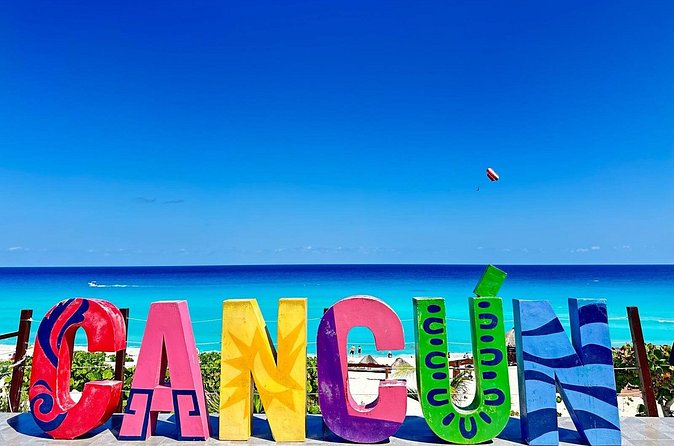
Playa Delfines, also known as El Mirador, is the obvious choice for the famous Cancun letters and a broad view of the Caribbean. It is worth visiting even if you do not intend to swim. This is a beach where the sea and the outlook can do most of the work.
It is also exposed. Waves and currents can make it a poor choice for an easy family swim. Municipal tourism information lists parking, public palapas, toilets and showers, but shade is limited and facilities can be affected by maintenance. Bring water and what you need for the visit rather than relying on a full beach-service setup.
Playa Marlín: the resort-coast experience
Marlín gives you a public route onto the long Caribbean-facing shore near Kukulcán Plaza. It is a useful choice when you want a broad beach with shops or food nearby rather than making Delfines your only look at this side of Cancun.
The same open-coast trade-off applies: assess the flags and waves before deciding to swim. Nearby hotels do not make their pools, loungers or restaurants part of the public beach facilities.
Access, transport and facilities
You do not need to buy a resort day pass to visit Cancun’s public beaches. Use the signed public entrances from Boulevard Kukulcán. Public beach access does not include walking through a hotel lobby or using its loungers, pool, toilets or towels. Paid parking, equipment rental and private services are separate choices.
For most Hotel Zone beach journeys, R1 and R2 buses are the practical low-cost option. They run along Boulevard Kukulcán and into Downtown, but their city routes differ. Check the destination board and direction before boarding, and tell the driver the beach you want. Our Getting Around Cancun guide covers buses, taxis and other local journeys.
A taxi is simpler when you have bulky beach gear or want a direct journey. Agree the fare before boarding and consider the journey back as well as getting there. If you drive, check the actual entrance and parking arrangement: a public beach does not guarantee an available parking space, and roadside stopping is not a substitute for a proper place to leave the car.
Toilets, showers, shade and food vary between entrances. Decide whether you want a quick towel-on-the-sand visit or several hours with facilities, then check the beach accordingly. For wheelchair users or anyone with limited mobility, assess the whole route: the drop-off point, steps or ramp, firm surface across the sand and access to a usable toilet. Do not rely on an accessibility label alone.
Flags and swimming conditions
Look at the sea before taking the plunge. Breaking waves, strong movement along the shore, a steep drop-off or difficulty keeping your footing are reasons to reconsider. Do not let other people in the water make the decision for you. If you are unsure, stay on the sand or choose a pool. In warmer months, also check for reports of sea lice.
Lifeguards cannot watch every person or every stretch of coast, and their presence and working hours vary. Do not assume a tower means someone is on duty. Swim in the marked area where supervision is operating, avoid boat lanes and do not swim after drinking alcohol.
With young children, choose a setting where you can stay close and actively watch them, with an easy exit from the water. Inflatables are toys rather than a substitute for swimming ability or supervision. If conditions are rough, a sheltered beach may be worth considering, but assess it afresh when you arrive.
Seaweed and weather
Sargassum is floating seaweed that can wash ashore along the Mexican Caribbean. Arrivals vary between years, seasons and individual beaches, and wind and currents can change what you find from one day to the next. It can be a bigger issue in the warmer months, but a calendar cannot promise a clear beach.
The north-facing beaches can be worth considering when the open coast has heavy seaweed, but they are not guaranteed to be clear. A cleaned strip of sand also tells you little about what is still floating offshore. Check a recent view of the particular beach, not just a photograph labelled “Cancun”. Our Cancun webcams offer a look at selected settings; check the feed’s location and timestamp, and remember that one view cannot speak for the whole coastline.
For seasonal planning, see Cancun weather. On the day, wind, thunderstorms and official restrictions matter more than a monthly average. Leave the water and exposed beach when thunder is nearby. Winter weather can roughen the sea too, so “outside seaweed season” does not mean “always calm”.
Isla Blanca: a different sort of beach outing
Isla Blanca lies north of Cancun, beyond the main city and Hotel Zone beach circuit. It is a coastal strip beside the Caribbean and Chacmuchuch Lagoon, rather than an island you reach by ferry. The appeal is a change from the built-up resort shore and more emphasis on the natural setting.
Treat it as a planned outing. Check the current public entrance, road condition and parking arrangement before driving out, and arrange your return if travelling by taxi. Do not assume an R1 or R2 Hotel Zone bus will take you there. Take water, food and sun protection, and do not count on toilets, shade, lifeguards or mobile reception at the spot you choose.
The Caribbean side can have waves; the lagoon is a separate environment and its calmer appearance is not a reason to treat it as a supervised swimming beach. Chacmuchuch Lagoon also attracts kitesurfers, so keep clear of their launch and activity areas. This is also a place to keep vehicles off the sand and dunes, avoid damaging vegetation and leave wildlife alone. Stay on established access routes and take all your rubbish back with you.
What to bring and beach etiquette
For a simple beach visit, bring water, a towel, sun protection, a hat and enough pesos for transport or small purchases. For a longer day, add food and suitable shade if the entrance allows it. Keep valuables to a minimum; leaving a bag on the sand while everyone swims is a poor plan.
Use reusable containers rather than glass, follow posted smoking and beach rules, and keep music low enough for people nearby to enjoy their own day. Do not move turtle-nest markers, handle turtles or disturb other wildlife. Leave the beach as you would like to find it.
Keep it simple: choose a beach that suits your group, check the conditions and be willing to change the plan. For a day away from the sand, our Things to Do in Cancun guide has plenty of other ideas.